

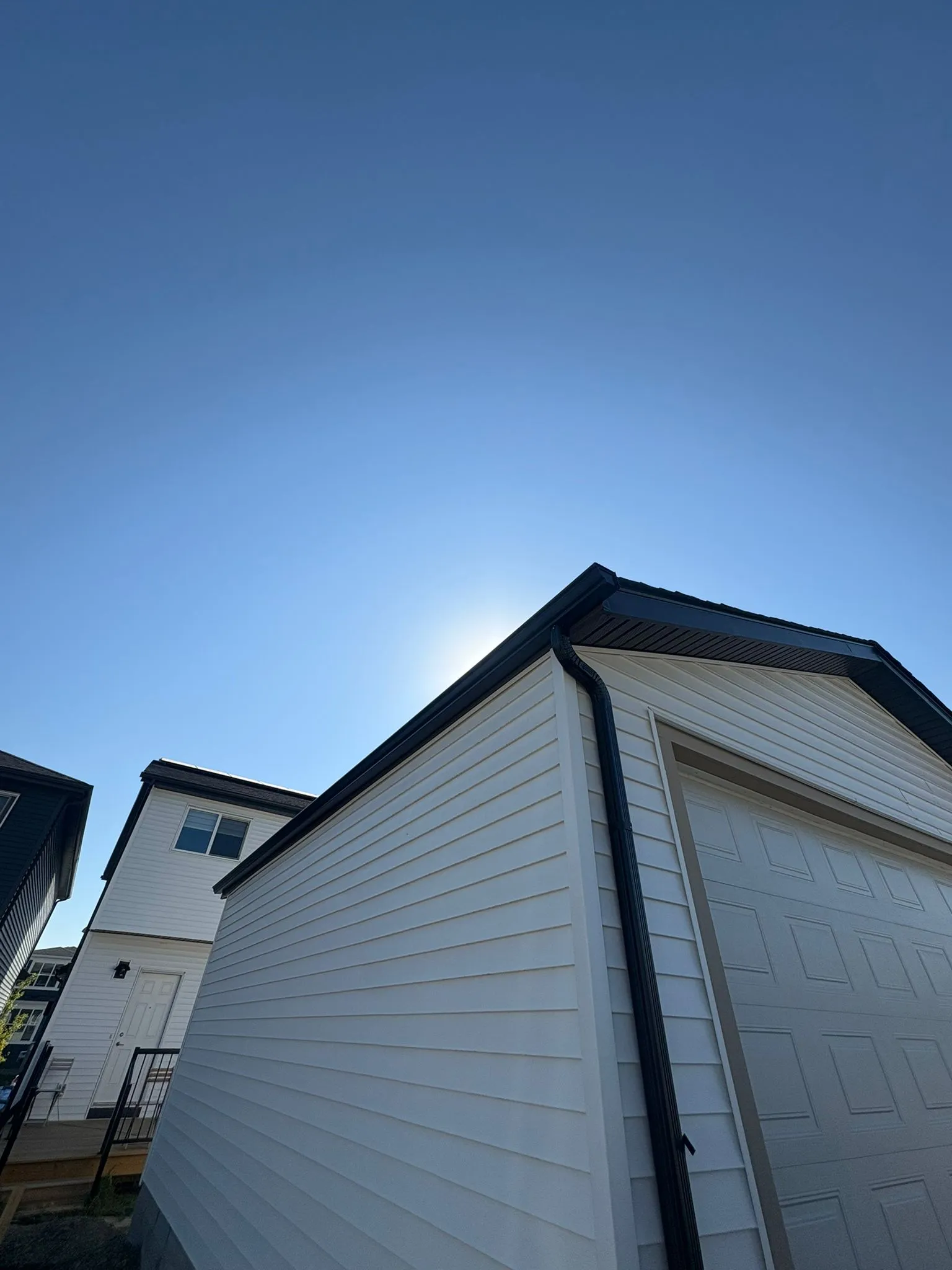
Eavestroughs · Calgary & Area
Downspouts & Drainage
Downspouts and extensions sized and placed properly — because where the water ends up is what actually matters
Eavestroughs
Downspouts & Drainage done right, the first time.
The trough catches the water; the downspout decides whether the exercise was worth doing. We size and place downspouts against actual roof area and pitch rather than defaulting to one per corner, and we carry the discharge well clear of a foundation sitting on expansive clay — which is the single most common cause of a wet basement we are called to fix.
More about downspouts
Built for Calgary's weather & homes.
Downspouts are the half of the eavestrough system nobody thinks about, and the half that decides whether the other half was worth installing. A perfectly formed, perfectly pitched seamless trough that dumps its entire load at the base of a wall has not solved a drainage problem — it has concentrated one.
This matters more in Calgary than in most Canadian cities because of what is under the house. Most of this region sits on expansive clay: soil that swells as it takes on water and shrinks as it dries. A foundation sitting in soil cycling through that movement is a foundation under stress, and the most efficient way to drive that cycle is to deliver an entire roof's worth of runoff to one spot beside the wall, over and over, every summer.
The working rule is straightforward — discharge a minimum of about 1.8 metres from the foundation, and further on a lot that slopes back toward the house. In practice that means extensions that actually reach and stay attached, rather than the stub elbow a builder installed and a second owner removed because it caught the lawnmower. Missing extensions are the most common and most consequential drainage defect we find, and among the cheapest to fix.
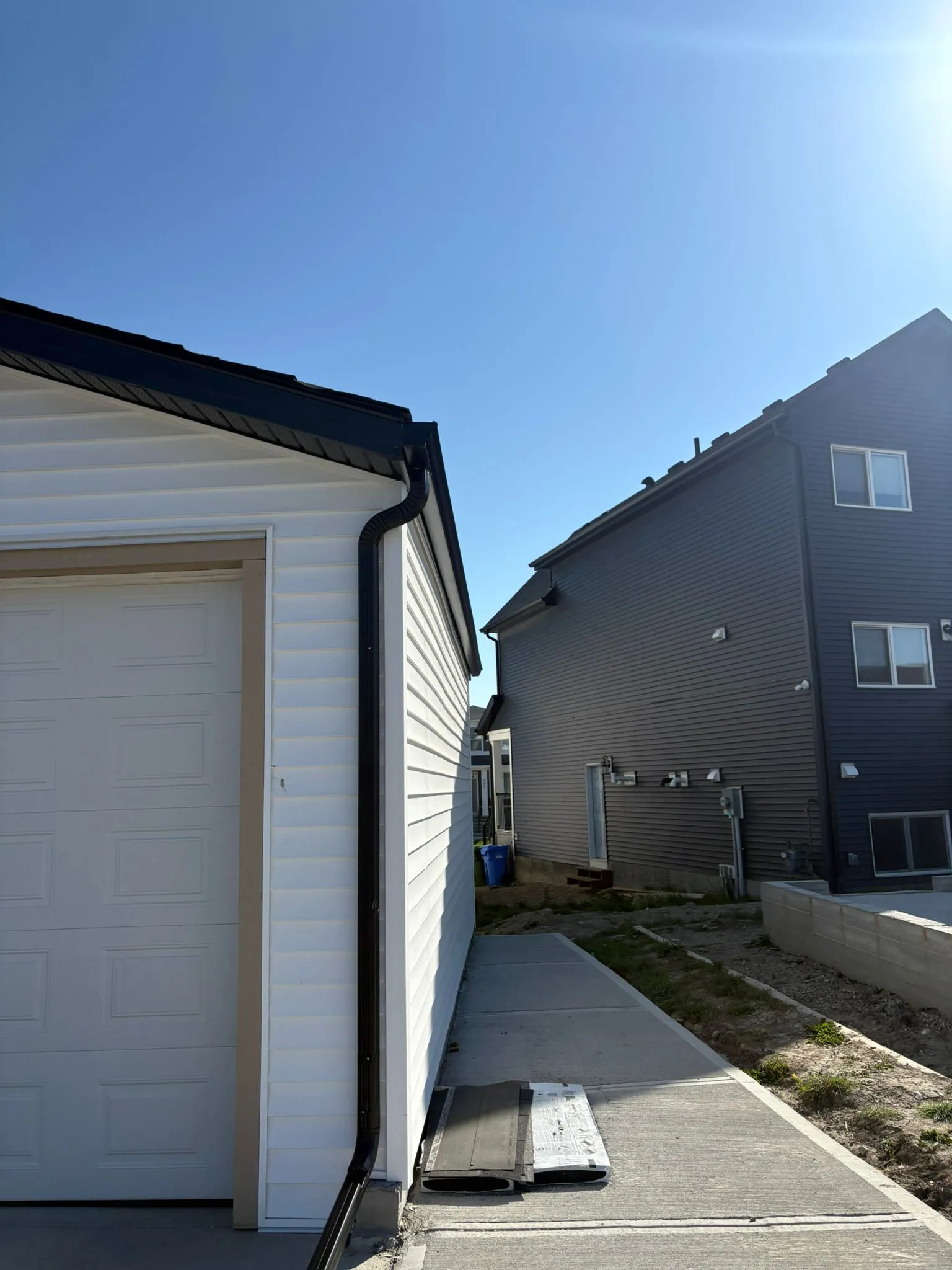
The second thing that goes wrong is outlet count. One downspout serving a forty-foot run of steep roof will overflow no matter how large the trough is, because water cannot leave the system fast enough. We calculate outlets against roof area and pitch rather than placing them where they are least visible.
We install, replace and reroute downspouts across Calgary, Airdrie, Chestermere, Cochrane, Okotoks, High River, Langdon, Strathmore, Crossfield, Carstairs, Didsbury, Olds, Innisfail, Red Deer, Canmore, Drumheller and the acreages of Rocky View, Foothills, Mountain View and Red Deer County.
The full guide
Everything worth knowing about downspouts in Alberta.
Sizing and placing downspouts properly
Two decisions matter: how big and how many. Both follow from roof area and roof pitch, and both are more often wrong than trough sizing is.
Standard 2x3 downspout is adequate for a modest roof area with a moderate pitch and reasonable outlet spacing. 3x4 downspout carries substantially more water, is far less prone to blocking because debris that would jam a 2x3 passes through it, and pairs with 6-inch trough. On any large roof, steep roof, or run with limited outlet locations, 3x4 is the right specification rather than an upgrade.
Outlet count comes from run length and the area feeding it. The failure mode we are called to fix most often is a long elevation with a single outlet at one end: the trough at the far end has to carry the entire run's water the whole distance, and in a heavy summer downpour it simply overflows before it gets there.
Placement then has to reconcile hydraulics with reality. The hydraulically ideal spot is sometimes the middle of a front elevation, where nobody wants a downspout. Corners, side elevations and the back of the house are usually workable compromises, but the compromise has to be made knowingly — moving an outlet twenty feet to hide it can mean adding a second one to keep the run from overflowing.
And there are places downspouts should not discharge, which people discover the hard way: onto a walkway or driveway that will ice over, onto a lower roof it will overload, toward a neighbouring property, or anywhere near a window well.
- 2x3 for modest roof areas with good outlet spacing
- 3x4 for large or steep roofs and all 6-inch trough systems
- Outlet count calculated from run length and contributing area
- Never discharging onto walkways, driveways or lower roofs
- Never discharging toward a window well or a neighbour's lot
Extensions — the cheapest fix for the most expensive problem
If we could get every homeowner in this city to do one drainage thing, it would be this: put proper extensions on every downspout and leave them on.
A downspout that ends at an elbow ninety centimetres from the wall is delivering thousands of litres a year into the soil directly against the foundation. On clay, that is the mechanism behind a large share of the wet basements, cracked foundations and settled walkways in this region. It is not dramatic, it is cumulative, and it takes years to show.
Rigid extensions are the most durable option and the right default: solid aluminum or PVC carried out to a discharge point on grade that slopes away. Hinged extensions solve the lawnmower problem — they lift out of the way and drop back, which is the practical answer for the ones that keep getting removed. Roll-out sleeves that unfurl under water pressure and retract when dry work well in low-traffic areas.
Buried discharge is available where a lot warrants it: a rigid pipe run underground to a pop-up emitter or a splash area well away from the house. It is the tidiest solution and the most expensive, and it has a real caveat in this climate — anything buried above the frost line can freeze and block, so it needs to be sloped, sized and terminated so it drains fully.
Splash pads at the discharge point are worth the small cost. Concentrated water landing on bare soil erodes it into a hole that then holds water against the very grade you were trying to preserve.
Winter, ice and downspouts in Calgary
Downspouts have a winter problem specific to a chinook climate. Water in the system during a thaw refreezes when the temperature drops back, and because a downspout is a vertical enclosed column, ice builds from the bottom up and eventually plugs it entirely. Once plugged, meltwater backs into the trough, freezes there, and adds mass to a system already carrying snow.
This is why extensions should be free-draining rather than laid flat on the ground where they hold water, and why the discharge point should not be somewhere that ponds and freezes back up the pipe.
It is also why discharge placement relative to hard surfaces matters so much here. A downspout emptying onto a driveway or walkway in a chinook cycle creates a sheet of ice by morning, which is both a liability and a genuine hazard. We route away from any surface people walk on.
Buried extensions deserve the caveat again: a line that cannot drain fully will freeze solid, and a frozen buried line backs the whole system up with no visible cause. If a buried run is the right answer for a lot, it needs slope and a terminus that will not submerge.
The one seasonal habit worth adopting: before the first hard freeze, check that every downspout and extension is clear and draining. It takes ten minutes and it is the difference between a system that handles winter and one that becomes a block of ice hanging off your fascia.
Diagnosing drainage problems around the house
A surprising share of the basement-moisture calls in this city trace back to roof drainage rather than to anything below grade, and the symptoms are readable from outside.
Water pooling against the foundation after rain, or a persistent damp patch on one section of wall, usually points to a downspout discharging too close. Soil that has settled into a depression right beside the wall is the same story in a later stage — the water eroded it, and now the depression holds water there deliberately.
Efflorescence — white mineral crusting on interior basement walls — indicates water moving through the concrete, and the source is very often above grade rather than below it.
Overflow marks and staining on the fascia below a trough, or plant growth in the trough itself, point to blockage or undersizing. Streaking down the siding beneath an outlet points to a joint or an outlet that is leaking.
And erosion in a garden bed under one specific spot on the roofline, with no downspout above it, usually means the trough overflows there in heavy rain — an outlet-count problem.
What roof drainage cannot fix is a grading problem, and we will say so. If the lot slopes toward the house, if a neighbour's downspout points at your foundation, or if a walkout is cut into a slope with no swale, extensions will help but not solve it. Those need regrading or landscape drainage, and telling you that is more useful than selling you a downspout that cannot succeed.
- Water pooling or soil settled against the foundation
- Damp patch or efflorescence on one section of basement wall
- Staining and overflow marks on fascia below the trough
- Erosion in a bed under a spot with no downspout above it
- Ice sheet on a walkway or driveway below a discharge point
- A downspout that drains slowly or not at all in a heavy rain
Downspouts and drainage across Calgary and Central Alberta
Drainage problems in this region cluster by lot type more than by neighbourhood. Walkout lots — common through Cranston, Riverbend, Douglasdale, Tuscany, Cochrane's hillsides and much of Canmore — are the hardest case, because the back of the house sits into a slope and any water delivered to the upper grade travels toward the structure by default.
Older inner-city lots have a different problem: original downspouts that discharged into now-abandoned clay weeping systems, or that were tied into a sanitary connection decades ago and later cut off at the wall with nothing put in their place.
New suburban lots in Livingston, Cornerstone, Seton, Rangeview, Alpine Park and the newer subdivisions in Airdrie, Chestermere and Okotoks tend to have adequate systems installed at build and extensions removed within the first few years. That is the easiest fix on this list and the one most worth doing.
Acreage drainage is its own discipline. Larger roofs deliver far more water, there is usually no municipal storm system to consider, and the discharge has to be planned around a septic field and a well head as well as the foundation. Getting concentrated roof runoff away from a septic field matters for the field's function, not just the house.
We handle all of it — new downspouts with a trough replacement, adding outlets to an overwhelmed existing system, extending and rerouting discharge, and telling you honestly when what you actually need is a landscaper with a laser level rather than another downspout.
Downspouts across Calgary & Central Alberta
Plus: Acme, Aldersyde, Ardenode, Arrowwood, Balzac, Banff, Bassano, Benchlands, Bergen, Black Diamond, Blackfalds, Blackie, Bottrel, Bowden, Carbon, Caroline, Carseland, Cayley, Champion, Cheadle, Claresholm, Cluny, Cochrane Lake, Conrich, Cremona, Dalroy, Dead Man's Flats, Delacour, Delburne, Dewinton, Dickson, Dogpound, Eckville, Eden Valley, Elbow Valley, Elnora, Ensign, Exshaw, Ghost Lake, Gleichen, Harmony, Harvie Heights, Heritage Pointe, Hussar, Huxley, Indus, Irricana, James River Bridge, Janet, Kananaskis Village, Kathyrn, Lac des Arcs, Linden, Longview, Lyalta, Madden, Markerville, Millarville, Milo, Morley, Morrin, Mossleigh, Munson, Namaka, Nightingale, Parkland, Penhold, Pine Lake, Priddis, Priddis Greens, Queenstown, Red Deer Lake, Redwood Meadows, Rocky Mountain House, Rockyford, Rosebud, Siksika Nation, Springbrook, Spruce View, Standard, Stavely, Swalwell, Torrington, Trochu, Tsuut'ina Nation, Turner Valley, Vulcan, Waiparous, Water Valley, Wimborne — and the surrounding Rocky View, Foothills, Mountain View, Wheatland, Kneehill and Red Deer county acreages.
Questions
Downspouts & Drainage FAQ
How far from the house should a downspout discharge?
+
A minimum of about 1.8 metres, and further on a lot that slopes back toward the house. Calgary sits on expansive clay that swells and shrinks with moisture, so concentrating an entire roof's runoff beside the foundation is the most efficient way to stress it. Missing or removed extensions are the most common drainage defect we find.
How many downspouts do I need?
+
It comes from run length and the roof area feeding each run, not from the number of corners. A single outlet serving a long elevation of steep roof will overflow regardless of trough size, because the water cannot leave the system fast enough. We calculate it rather than defaulting.
2x3 or 3x4 downspouts?
+
3x4 for large roofs, steep roofs, long runs with limited outlet locations, and any 6-inch trough system. It carries substantially more water and is far less prone to blocking, because debris that jams a 2x3 passes straight through it. 2x3 is fine on modest roof areas with good outlet spacing.
My basement is damp — could it be the downspouts?
+
Very often, yes. A large share of basement-moisture calls in this city trace to roof drainage rather than anything below grade. Look for water pooling against the foundation, soil settled into a depression beside the wall, or a downspout ending in a short elbow. Those are cheap fixes for an expensive symptom.
Can downspouts be buried underground?
+
Yes, and it is the tidiest solution — a rigid pipe to a pop-up emitter well away from the house. The Alberta caveat is real though: anything buried above the frost line can freeze and block, and a frozen buried line backs the whole system up with no visible cause. It needs proper slope and a terminus that will not submerge.
My downspout freezes solid every winter. What can I do?
+
That is usually water sitting in the system during a chinook thaw and refreezing from the bottom up. The fixes are making sure the trough drains fully so less water is standing, keeping extensions free-draining rather than flat on the ground, and moving the discharge point away from anywhere that ponds and freezes back up the pipe.
Where should a downspout never discharge?
+
Onto a walkway or driveway that will ice over, onto a lower roof it will overload, toward a window well, or toward a neighbouring property. In a chinook climate, a downspout emptying onto a walking surface creates a sheet of ice by morning.
Can you just add extensions to my existing downspouts?
+
Yes, and it is often the highest-value small job on a property. Rigid, hinged or roll-out depending on whether the extension needs to move for mowing — the hinged ones solve the problem of extensions that keep getting removed.
Will new downspouts fix my drainage if my lot slopes toward the house?
+
They will help, but they will not solve it, and we will tell you that rather than sell you something that cannot succeed. A lot that grades toward the structure needs regrading or a landscape drainage solution. Roof drainage is one input among several.
Do you match the colour to my siding?
+
Yes. Downspouts are selected from the same stock aluminum range as the trough and fascia, so the whole system reads as one detail rather than three near-misses.
Related services
We also handle
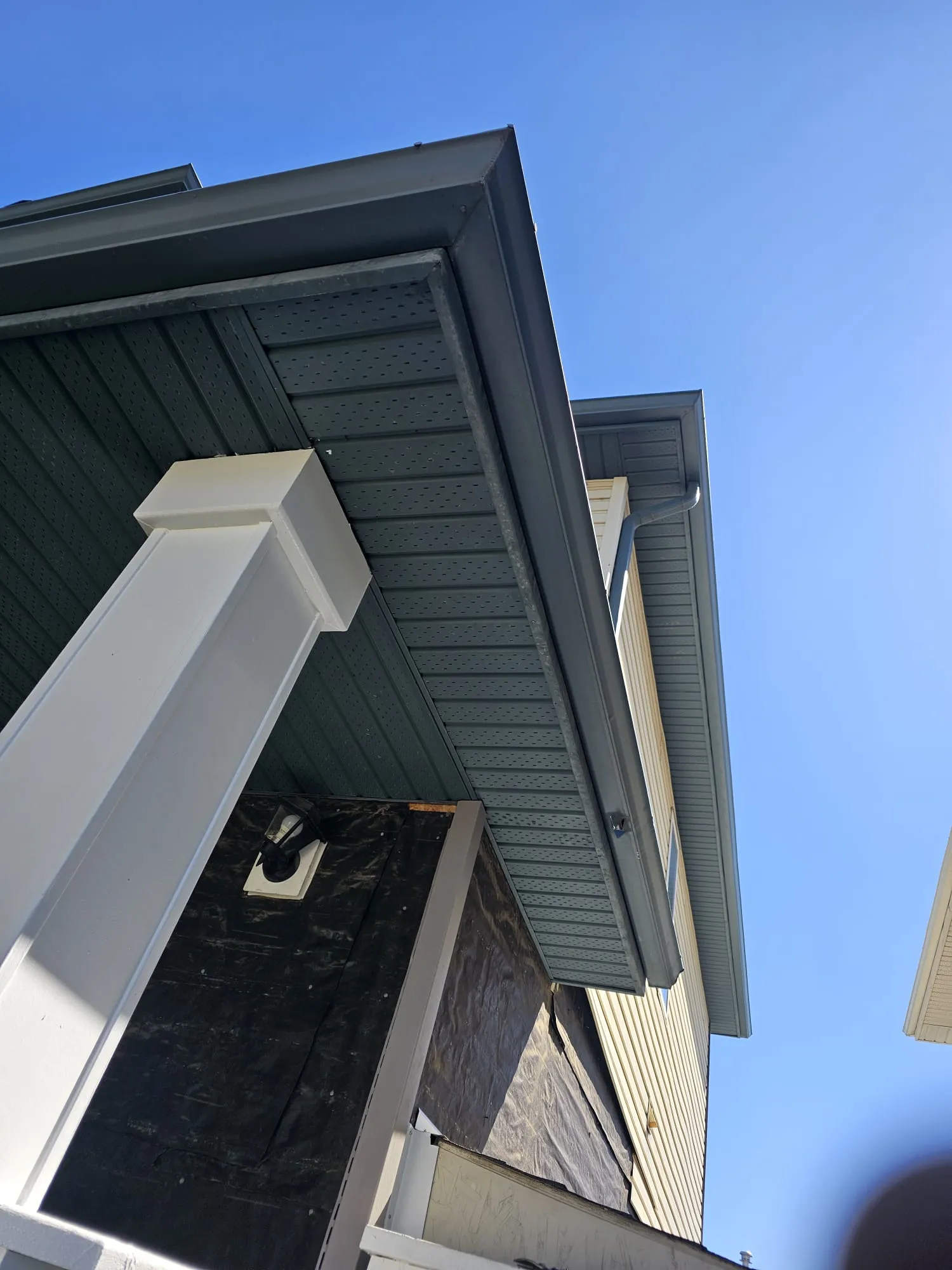
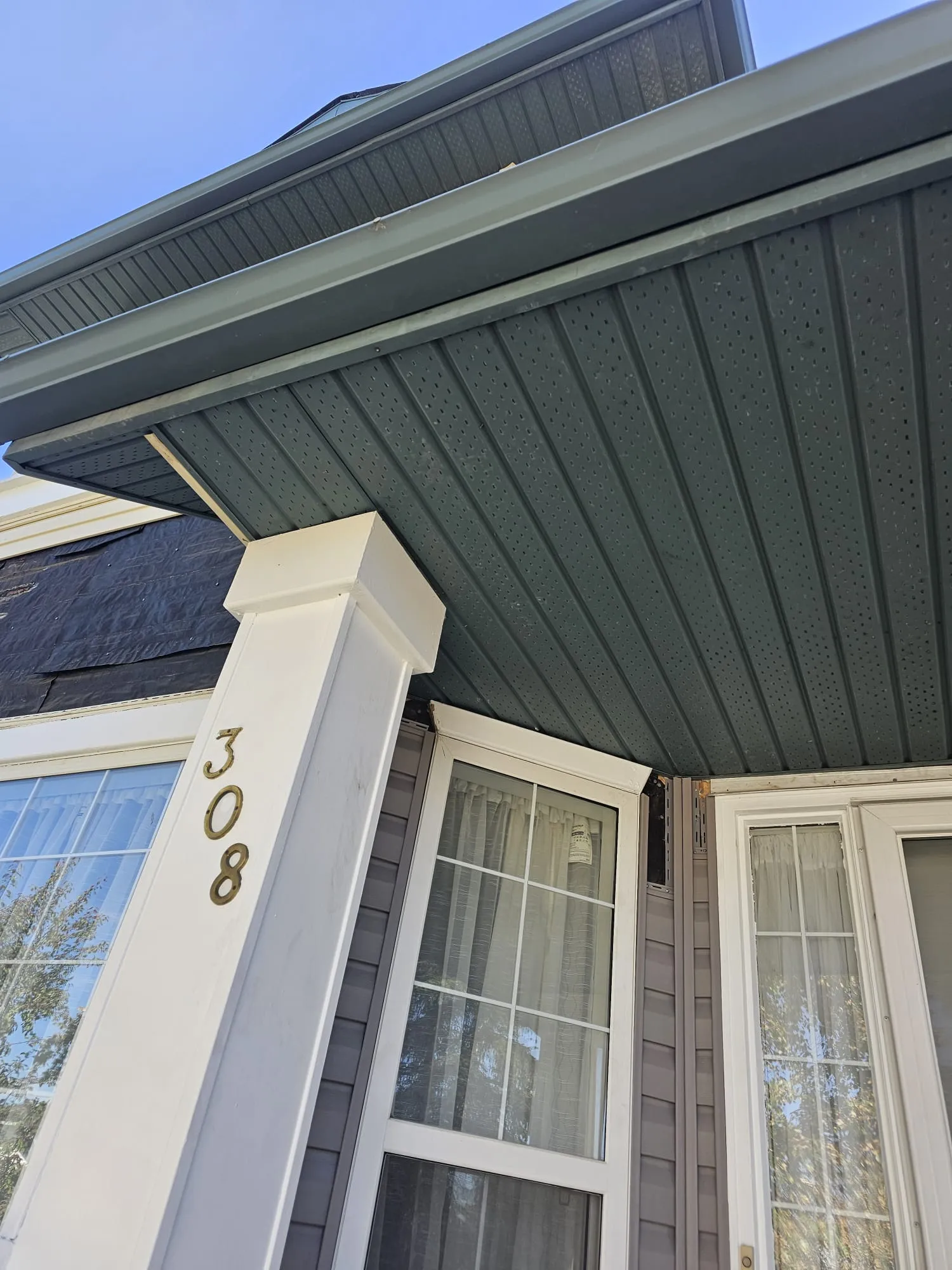
Our work
Downspouts & Drainage & more
Free inspection
Get your downspouts quote
No pressure · No surprises
Ready to move on your downspouts project?
Free on-site inspection, honest written quote, and full insurance-claim support if you need it.