

Calgary & Southern Alberta
Siding
Siding, soffit and fascia that change how your home reads from the street — and hold up to Alberta hail, sun and wind.
Siding
Calgary siding done properly — vinyl and insulated vinyl, James Hardie fibre cement, and the soffit, fascia and trim that finish an exterior the way it should be finished.
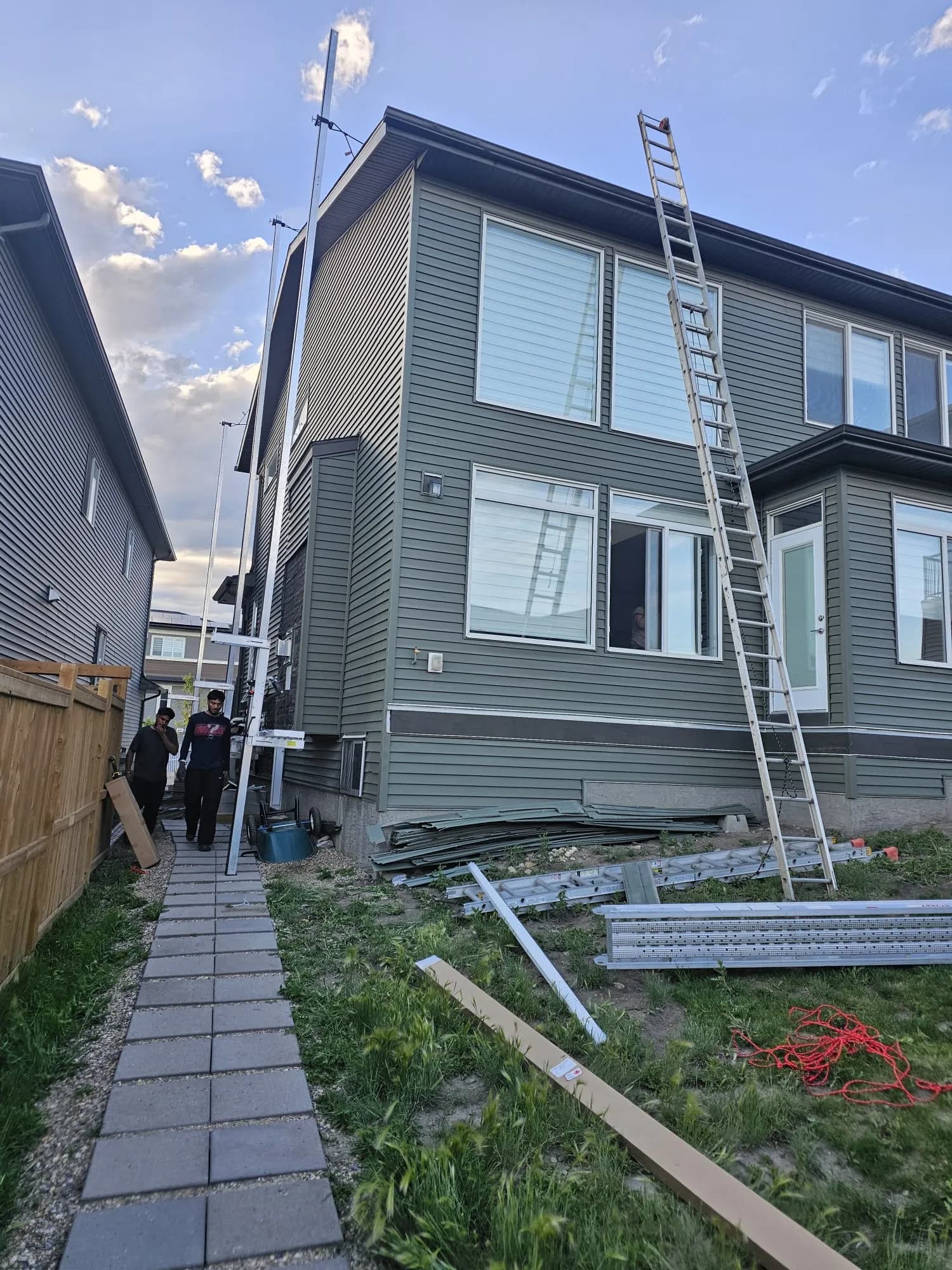
Siding is the largest visible surface on a house, which makes it the fastest way to change how a home looks — and the surface taking the most direct hit from hail, UV and wind-driven rain. 7 Lucky Enterprises installs vinyl and insulated vinyl siding, James Hardie fibre cement, and full soffit, fascia and trim packages, on houses and on detached garages, across Calgary and out through Central Alberta.
Siding is only as good as the crew that hangs it, and that is where 7 Lucky earns its reputation. Every job is owner-run and hands-on, backed by installation to manufacturer specification, premium warrantied products from names like James Hardie, Gentek and Kaycan, and a written workmanship warranty layered over the manufacturer's coverage. We are licensed, insured and WCB-covered, and every project starts with a free on-site inspection of the existing wall assembly rather than a guess from the curb.
The failure modes here are specific to Alberta. Hail cracks brittle vinyl on the storm-facing elevation, especially older panels that have spent fifteen summers in high-altitude UV. Chinook wind finds panels that were nailed tight instead of allowed to float. And the freeze-thaw cycle drives moisture into any gap in the water-resistive barrier behind the cladding. Getting the layers behind the siding right matters at least as much as the panel you choose.
Because we also roof and install eavestroughs, we look at the whole envelope at once. Rotten fascia usually means a water problem above it. Cracked siding under a downspout usually means the downspout has been discharging against the wall for years. Fixing the visible symptom without the cause is how a homeowner ends up paying twice.
Options
Siding services
Vinyl Siding
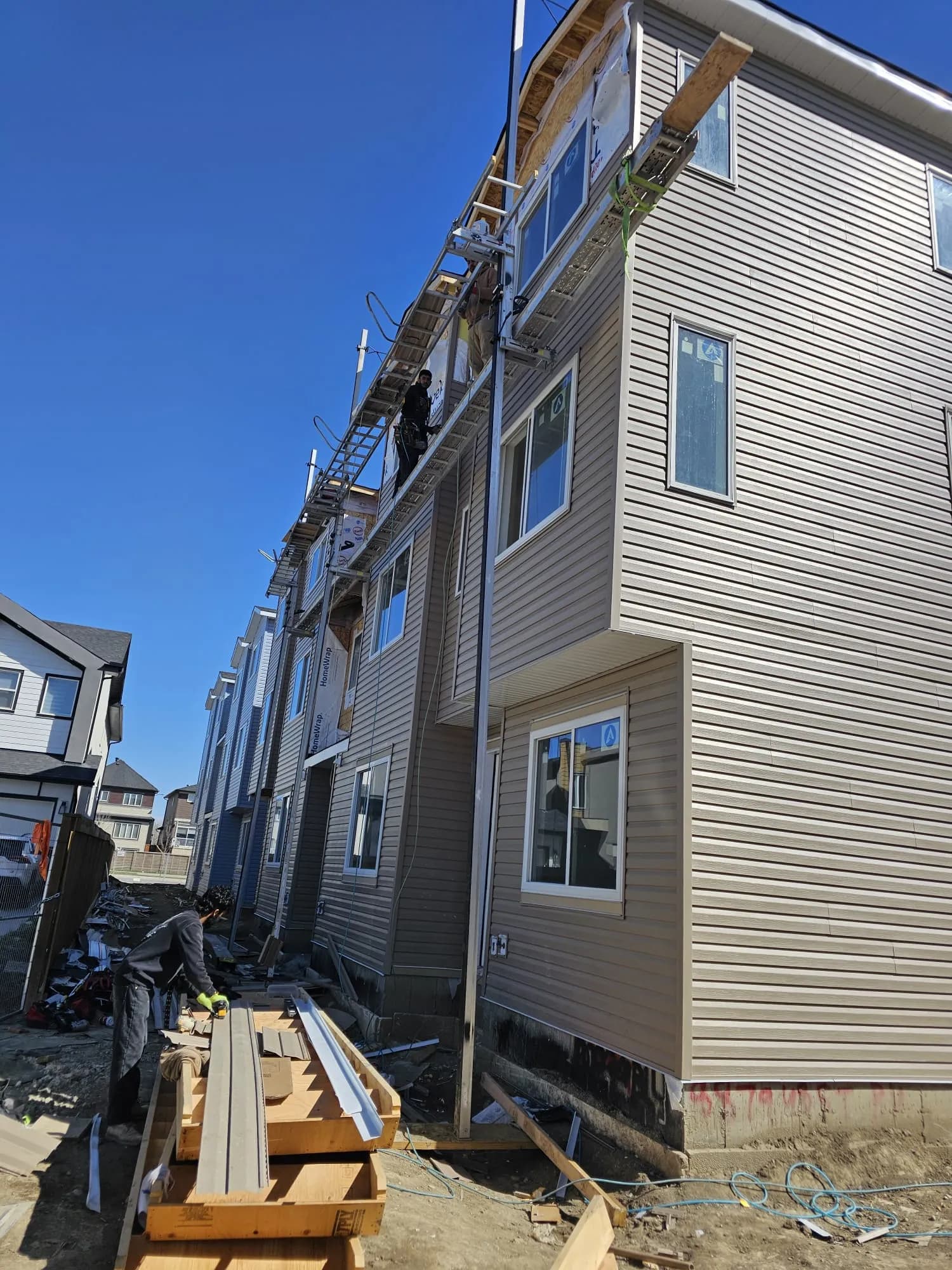
Vinyl and insulated vinyl siding in Calgary and Central Alberta by 7 Lucky Enterprises. Premium warrantied panels from Gentek, Kaycan and Royal, correct expansion detailing, water-resistive barrier and flashing corrected during the re-side, matching soffit, fascia and trim. Free inspection, written workmanship warranty.
Learn more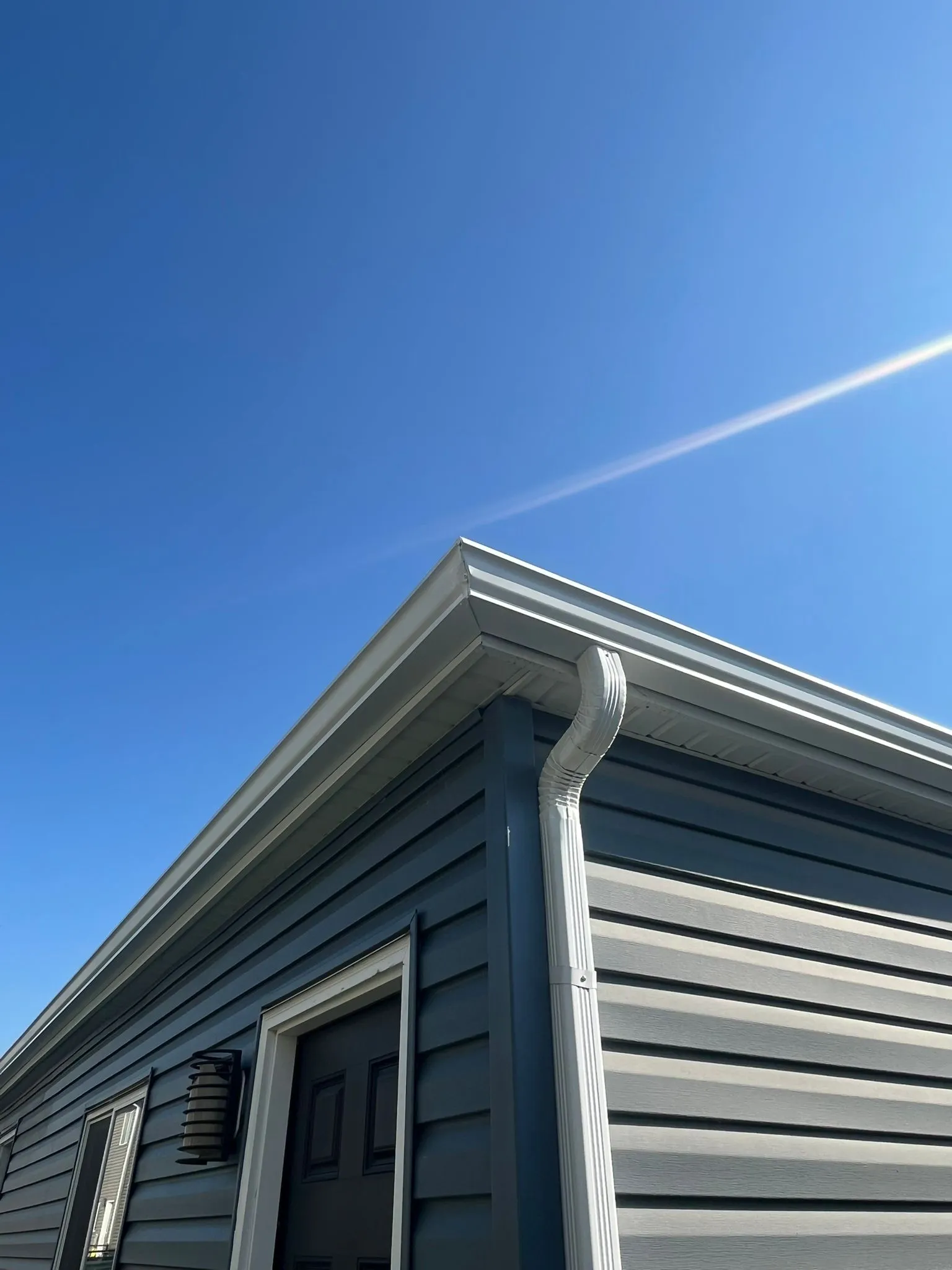
Fiber Cement (James Hardie) Siding
James Hardie fibre cement siding in Calgary and Central Alberta by 7 Lucky Enterprises. HardiePlank lap, HardiePanel, HardieShingle and ColorPlus finishes installed to Hardie's published specification. Hail and fire resistant, decades of colour retention, written workmanship warranty. Free on-site inspection.
Learn more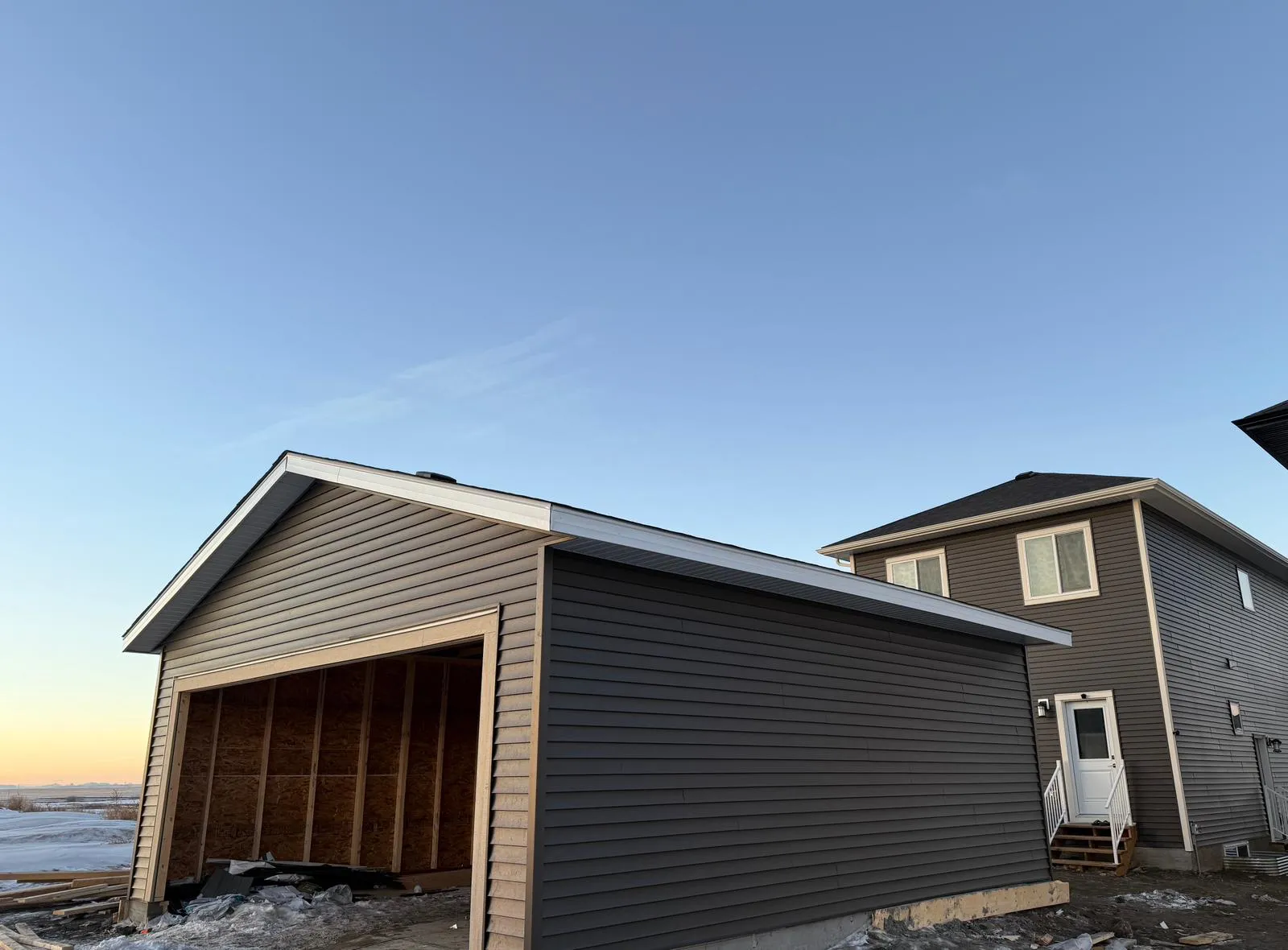
Soffit & Fascia
Soffit and fascia installation and repair in Calgary and Central Alberta by 7 Lucky Enterprises. Vented aluminum and vinyl soffit, fascia and rotten sub-fascia replacement, blocked attic intake cleared, drip edge corrected, and matching seamless eavestroughs. Free inspection, written workmanship warranty.
Learn moreThe full guide
Siding in Calgary & Central Alberta.
Vinyl or James Hardie — the honest comparison
Vinyl siding is the value choice and, done well, a genuinely good one. Modern panels are dimensionally stable, come in a wide colour range with fade warranties, need nothing more than an annual rinse, and deliver the biggest visual change per dollar of any exterior product. Insulated vinyl adds a contoured foam backer that raises the wall's effective R-value, deadens sound, and gives the panel a solid, non-hollow feel when you knock on it. The trade-offs are real: vinyl gets brittle in deep cold, so it is vulnerable to impact in a February hailstorm, and it will not take paint if you change your mind about colour.
James Hardie fibre cement sits in a different class. It is a cement-and-cellulose composite: heavy, dimensionally stable, non-combustible, and far more resistant to hail and wind-driven debris than any vinyl. Hardie's ColorPlus factory finish holds its colour for decades and can be repainted later if tastes change. It also carries the crisp shadow lines and thicker butt edges that read as premium from the street — the reason it dominates on higher-end infills and estate homes.
The trade-offs run the other way too. Hardie costs more, weighs several times what vinyl weighs, and takes considerably more labour to install correctly — it needs specific fastening, specific gapping and specific flashing at every joint. A bad Hardie install is worse than a good vinyl one. That is exactly why installer skill matters more with this product than with any other cladding we hang.
If you want our short version: choose insulated vinyl when budget is the binding constraint and you want the most visible improvement for the money. Choose James Hardie when you plan to stay in the house, when hail exposure is high, or when the look matters enough to pay for it. Many homeowners land on a mix — Hardie on the front elevation and gables where it is seen, vinyl on the sides.
What sits behind the panel
Almost every siding failure we are called to fix is a failure of the layers behind the cladding, not the cladding itself. Siding is a rain screen, not a waterproof membrane: it is designed to shed the bulk of the water and let the assembly behind it handle the rest. What handles the rest is the water-resistive barrier, the flashing at every opening, and the drainage path that lets incidental moisture get back out.
So when we open a wall, we look at the sheathing for rot and delamination, at the house wrap for tears and reverse laps, at the window and door flashing, and at the transitions — where cladding meets roof, where it meets the foundation, where two materials meet at a storey line. Those transitions are where the water actually gets in.
Correcting them during a re-side costs a fraction of what it costs later. Once the new cladding is on, getting back to that layer means taking it all off again. This is the single biggest reason to use a contractor who inspects the assembly before quoting rather than pricing per square foot over the phone.
The other detail worth naming is expansion. Vinyl moves noticeably with temperature, and in a climate that swings 60 degrees across the year it has to be hung so it can float — nailed in the centre of the slot, not driven tight, with clearance at the ends of every run. Panels nailed tight buckle in the first hot week. It takes no extra material to do this correctly, only attention.
Soffit, fascia and the eave assembly
Fascia is the board running along the roof edge that your eavestroughs are hung on. Soffit is the vented underside of the roof overhang. Between them they close the roof assembly, feed intake air to the attic, and keep birds, wasps and rodents out of it. They are also the parts homeowners think about least and the parts that fail first.
Rotten fascia is the classic symptom. Eavestroughs sag, pull away from the house, or tear off entirely in a freeze, and the cause is almost always that the wood behind them has been wet for years — from a clogged trough overflowing behind the gutter, a missing drip edge letting water wick back, or ice damming that pushed water into the overhang every winter. Replacing the fascia without fixing that is a repair with an expiry date.
Soffit failure is quieter and more expensive. Blocked or painted-over soffit vents starve the attic of intake air, which unbalances the ventilation, which cooks the shingles from below in summer and builds ice dams in winter. We routinely find attics where the insulation was blown in over the soffit vents years ago and the homeowner has been paying for it in roof life ever since.
Because we work all three trades, we handle the eave as one assembly: new fascia and sub-fascia where the wood is gone, properly vented soffit with the intake path actually open, drip edge, and eavestroughs sized and pitched to the roof they are catching.
- Aluminum and vinyl soffit with genuine open venting
- Fascia and rotten sub-fascia replacement
- Drip edge and eave flashing correction
- Attic intake-path clearing at the soffit
- Matching trim, corners, and window and door surrounds
- Garage soffit and fascia to match the house
Hail damage, insurance and siding
Siding is frequently the forgotten half of a hail claim. A homeowner files for the roof, the adjuster approves the roof, and the cracked panels on the north or west elevation never get inspected — until the house is sold and an inspector flags them. If hail hit your roof hard enough to bruise shingles, it almost certainly hit the walls facing the storm.
What an adjuster looks for on siding is different from roofing. On vinyl it is cracks and punctures, often on the lower half of a panel where it is least supported, and often only visible in raking light. On fibre cement it is chipping and holes. On aluminum soffit, fascia and trim it is dents, which are also the most useful corroborating evidence that a hail event of a given size actually occurred at that address.
We inspect the walls at the same time as the roof, photograph what we find, and put it in the same scope. One contractor documenting the entire envelope is materially easier for an adjuster to approve than three trades submitting separately — and it means you are not left with a new roof above ten-year-old cracked siding.
Siding across Calgary and Central Alberta
Re-siding demand in this region clusters by housing era. Late-1970s and 1980s subdivisions — think Ranchlands, Whitehorn, Marlborough, Beddington, Woodbine — are on original or first-replacement siding that has now taken forty years of Alberta UV. Early-2000s suburbs are hitting the age where builder-grade vinyl has gone chalky and brittle. Newer estate builds and acreages more often want a material upgrade rather than a repair.
We work all of them, across every Calgary quadrant and out through Airdrie, Chestermere, Cochrane, Okotoks, Strathmore, Langdon, Crossfield, Carstairs, Didsbury, Olds, Innisfail, Red Deer, Canmore, Drumheller and the surrounding counties.
Acreage siding is its own problem. A country-residential home has no neighbouring buildings to break the wind, which means driven rain and snow hit the wall assembly directly and far harder than they do on a sheltered city lot. Material choice and flashing detail matter more out there, and we specify accordingly.
Siding across Calgary & Central Alberta
Plus: Acme, Aldersyde, Ardenode, Arrowwood, Balzac, Banff, Bassano, Benchlands, Bergen, Black Diamond, Blackfalds, Blackie, Bottrel, Bowden, Carbon, Caroline, Carseland, Cayley, Champion, Cheadle, Claresholm, Cluny, Cochrane Lake, Conrich, Cremona, Dalroy, Dead Man's Flats, Delacour, Delburne, Dewinton, Dickson, Dogpound, Eckville, Eden Valley, Elbow Valley, Elnora, Ensign, Exshaw, Ghost Lake, Gleichen, Harmony, Harvie Heights, Heritage Pointe, Hussar, Huxley, Indus, Irricana, James River Bridge, Janet, Kananaskis Village, Kathyrn, Lac des Arcs, Linden, Longview, Lyalta, Madden, Markerville, Millarville, Milo, Morley, Morrin, Mossleigh, Munson, Namaka, Nightingale, Parkland, Penhold, Pine Lake, Priddis, Priddis Greens, Queenstown, Red Deer Lake, Redwood Meadows, Rocky Mountain House, Rockyford, Rosebud, Siksika Nation, Springbrook, Spruce View, Standard, Stavely, Swalwell, Torrington, Trochu, Tsuut'ina Nation, Turner Valley, Vulcan, Waiparous, Water Valley, Wimborne — and the surrounding Rocky View, Foothills, Mountain View, Wheatland, Kneehill and Red Deer county acreages.
No pressure · No surprises
Ready to plan your siding project?
Free on-site inspection and an honest written quote from a crew that stands behind its work.